
The short version
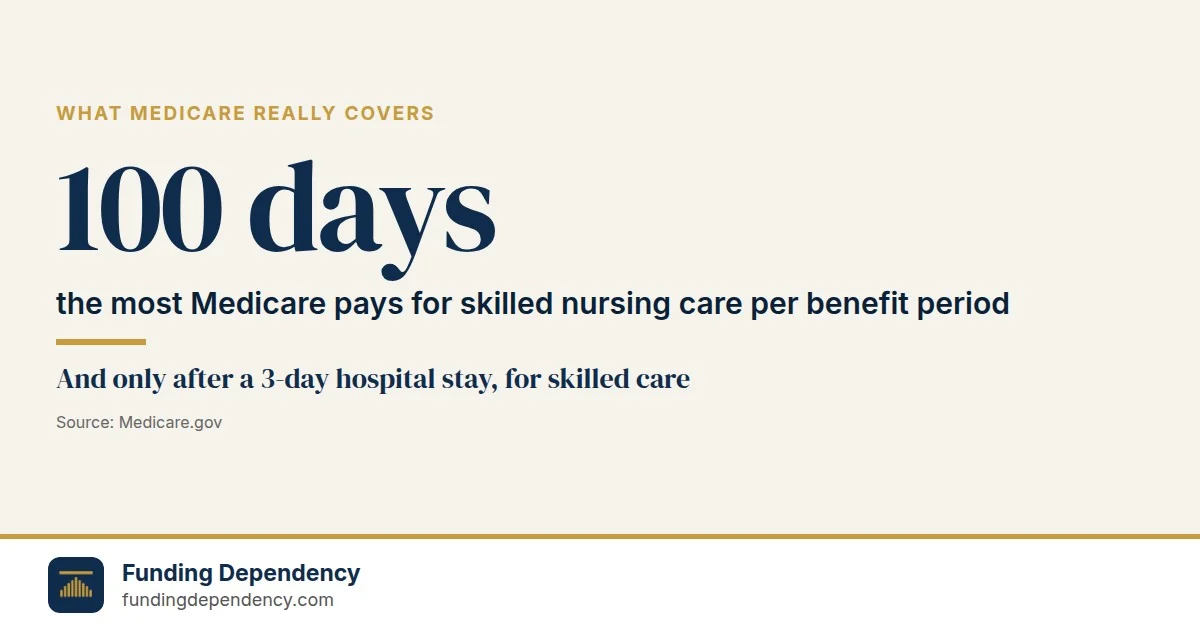
- Medicare covers up to 100 days of skilled nursing per benefit period, only after a qualifying three-day inpatient hospital stay (Medicare.gov).
- Time under observation or in the emergency room doesn’t count toward the three days.
- Coverage ends when daily skilled care is no longer needed, even if 100 days haven’t passed.
- In 2026, days 21 to 100 cost $217 a day; after day 100 you pay everything (CMS).
"Medicare covers 100 days in a nursing home" is one of the most repeated, and most misunderstood, facts in long-term care. The number is real. But it’s a maximum, not a promise, and most families learn the difference at the worst possible moment.
What the 100 days actually are
Medicare Part A covers skilled nursing facility care for up to 100 days per benefit period (Medicare.gov). In 2026:
- Days 1 to 20: $0 per day after the $1,736 Part A deductible
- Days 21 to 100: $217 per day coinsurance, up to $17,360 for the full 80 days (CMS)
- Day 101 and after: you pay all costs
That’s the ceiling. Three rules decide whether a stay gets anywhere near it.
Rule 1: the three inpatient days
Medicare requires a qualifying hospital stay of at least three inpatient days in a row before skilled nursing is covered. The days are counted from formal admission and don’t include the discharge day. Time spent under observation or in the emergency room doesn’t count, even if the person stayed overnight in a hospital bed.
This is the most common surprise. A parent can spend three nights in the hospital and still not qualify, because they were never formally admitted. Ask the hospital directly: "Is she an inpatient, or under observation?" Hospitals must give a written notice to people kept under observation for more than 24 hours.
Rule 2: daily skilled care
Medicare pays only while the person needs daily skilled nursing or therapy, the kind of care that requires a nurse or therapist. When progress levels off, or the main need becomes help with bathing, dressing and walking, Medicare considers it custodial care, and coverage stops. That can happen on day 12 or day 40.
The facility must give written notice before Medicare coverage ends, and you have the right to a fast appeal. The notice explains how.
Rule 3: custodial care was never covered
Medicare.gov is clear that Medicare doesn’t pay for long-term custodial care, at home, in assisted living or in a nursing home. That everyday help is most of what long-term care actually is.
What to do before discharge
- Confirm inpatient status while the person is still in the hospital.
- Ask the discharge planner which skilled nursing facilities have openings and accept Medicare.
- Check the supplement. A Medigap policy can pay the $217-a-day coinsurance for days 21 to 100. Medicare Advantage plans set their own rules and may require prior approval.
- Plan for day 21 and beyond. Ask the facility’s social worker how long they expect skilled care to last.
- Start the next conversation early. If the person won’t be able to go home safely, the family needs a plan for what comes after Medicare.
Where the other pillars come in
Medicare is one of the ten funding pillars, but it’s the shortest one. When it stops, families typically turn to private pay, long-term care insurance if a policy is in place, VA benefits for eligible veterans, or Medicaid. Our post on the ten ways to pay for long-term care explains how they fit together.
Educational content only. Not legal, financial or medical advice.
Common questions
Does Medicare always pay for 100 days of skilled nursing?
No. 100 days is the maximum per benefit period. Coverage ends sooner when the person no longer needs daily skilled nursing or therapy, and it requires a qualifying three-day inpatient hospital stay first.
Does observation status count toward the three-day rule?
No. Only inpatient days count, starting from formal admission. Time under observation or in the emergency room doesn’t count, even overnight.
How much does skilled nursing cost under Medicare in 2026?
Days 1 to 20 cost $0 after the $1,736 Part A deductible. Days 21 to 100 cost $217 a day. After day 100, you pay all costs.
Can I appeal when Medicare skilled nursing coverage ends?
Yes. The facility must give written notice before coverage ends, and the notice explains how to request a fast appeal.