
The short version
- Burnout builds slowly: poor sleep, short temper, skipped doctor visits of your own.
- Unpaid family care is often what’s holding the funding plan together.
- Long-term care insurance, VA Aid and Attendance, Medicaid waivers and private pay can each pay for outside help (LongTermCare.gov).
- Our free Caregiver Burnout Check-In takes about two minutes.
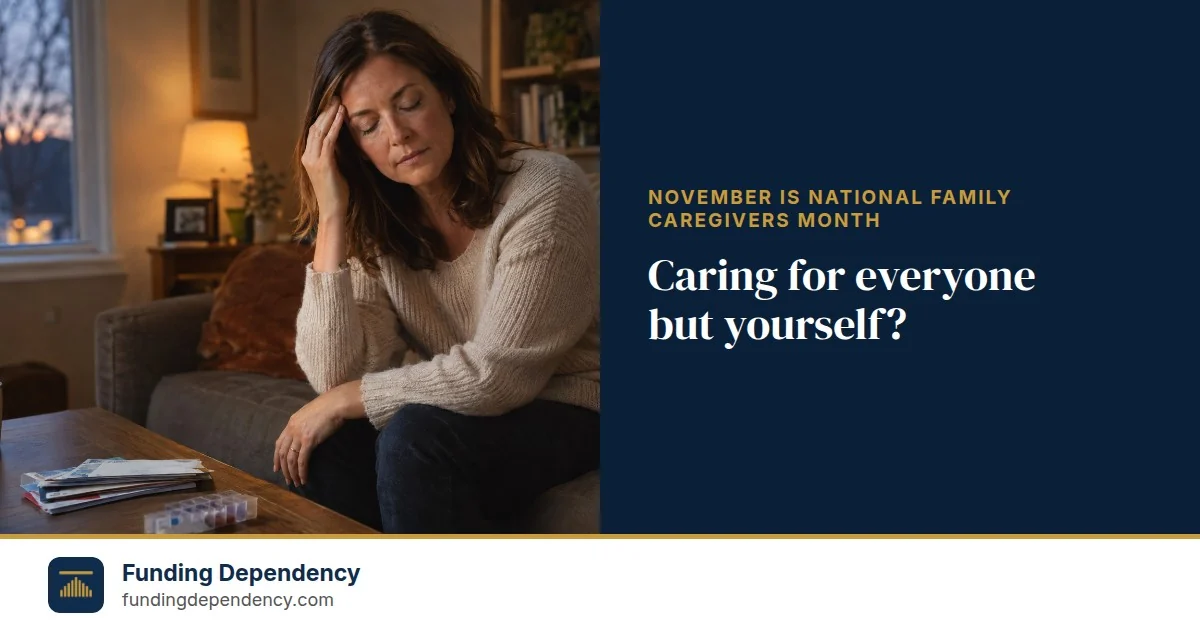
November is National Family Caregivers Month. Caregiver burnout is usually talked about as an emotional problem, and it is. But it’s also a practical one: when the main caregiver can’t continue, the whole care plan changes, and so does the cost.
Burnout builds slowly
It rarely starts with a crisis. It starts with poor sleep, a shorter temper, skipping your own doctor’s appointments, and the feeling that you can’t take a day off. Over months, it can turn into exhaustion, health problems and depression.
Why it’s a funding problem
In many families, unpaid care from a spouse or adult child is what keeps the cost of care manageable. When that caregiver burns out, the family suddenly needs to pay for home care, adult day care, assisted living or a nursing home, often in a hurry and without a plan.
Looking at it the other way: paying for some outside help now can protect the caregiver’s health and keep the arrangement working longer.
What outside help costs
The 2025 CareScout survey puts the national median for in-home care at $35 an hour, about $6,673 a month at 44 hours a week (CareScout). Even 10 or 15 hours a week of help, covering bathing, a few afternoons off or overnight help, can change how a caregiver feels.
Pillars that can pay for help
- Traditional long-term care insurance and hybrid policies typically pay for in-home care once the policyholder needs help with two of six daily activities or has a severe cognitive impairment. Many policies cover respite care and adult day care. Check whether the policy can pay family members.
- VA Aid and Attendance adds to a VA pension for eligible wartime veterans and surviving spouses who need help. In-home care costs can count as medical expenses that raise the payment.
- Medicaid home and community-based waivers can pay for in-home help and, in some states, family caregivers, though waiting lists are common.
- Private pay gives the most control. Qualified long-term care costs may also be tax-deductible as medical expenses (IRS Publication 502).
- Local programs: Area Agencies on Aging offer respite and caregiver support, often at low or no cost.
Check in with yourself
Our free Caregiver Burnout Check-In is ten questions and takes about two minutes. It isn’t a diagnosis, and nothing is stored unless you choose to save it. If your score is high, that’s a signal to add help, and our Journey Assessment can show which pillars could pay for it.
The Dependency Series, our companion site, also offers a Caregiver Load Check-In focused on hours and tasks.
To every caregiver: thank you. Taking care of yourself is part of taking care of them.
Educational content only. Not legal, financial or medical advice. If you’re in crisis, call or text 988.
Common questions
What are signs of caregiver burnout?
Poor sleep, irritability, skipping your own doctor’s visits, constant exhaustion, getting sick more often and feeling you can’t take a day off.
Can long-term care insurance pay for in-home help?
Most policies pay for in-home care once the policyholder needs help with two of six daily activities or has a severe cognitive impairment. Many cover respite and adult day care too.
Can VA Aid and Attendance pay for home care?
Yes. It adds to a VA pension for eligible wartime veterans and surviving spouses who need help with daily activities, and in-home care costs can count as medical expenses that raise the payment.
Is the Caregiver Burnout Check-In private?
Yes. It’s ten questions, takes about two minutes, and nothing is stored unless you choose to save it.